

 Transect Team

Our data center customers asked for more visibility into air permitting, which we have now added to our platform with coverage across the lower 48 states. We also added new state regulations and associated permits for data center development.
Together, these additions help you identify regulatory requirements during site selection, understand implications for project design, and account for approvals in development schedules.
Understanding Your Air Permitting Requirements
Although developed in response to data center customer requests, the new air-permitting guidance also supports Oil & Gas and Nuclear project types.
Air permitting applies to stationary sources of air pollution, which for data centers commonly include diesel or natural gas backup generators, combustion turbines, and other on-site power equipment. No single nationwide data center size threshold determines permit applicability, which depends on equipment type and capacity, fuel, emissions controls, operating limitations, and potential emissions from individual units and the facility as a whole. New or modified stationary sources may require preconstruction permits, while facility-wide potential emissions may trigger Title V operating permit requirements involving ongoing compliance and reporting. Using equipment only for emergency backup does not automatically eliminate air-permitting requirements.
Transect displays these permit records under the “State” section of a report’s Permit Matrix, but the guidance addresses applicable federal, state, and local air-permitting requirements. Under the federal Clean Air Act, state and local agencies administer many permitting programs and may impose additional requirements, while EPA retains authority in certain circumstances.
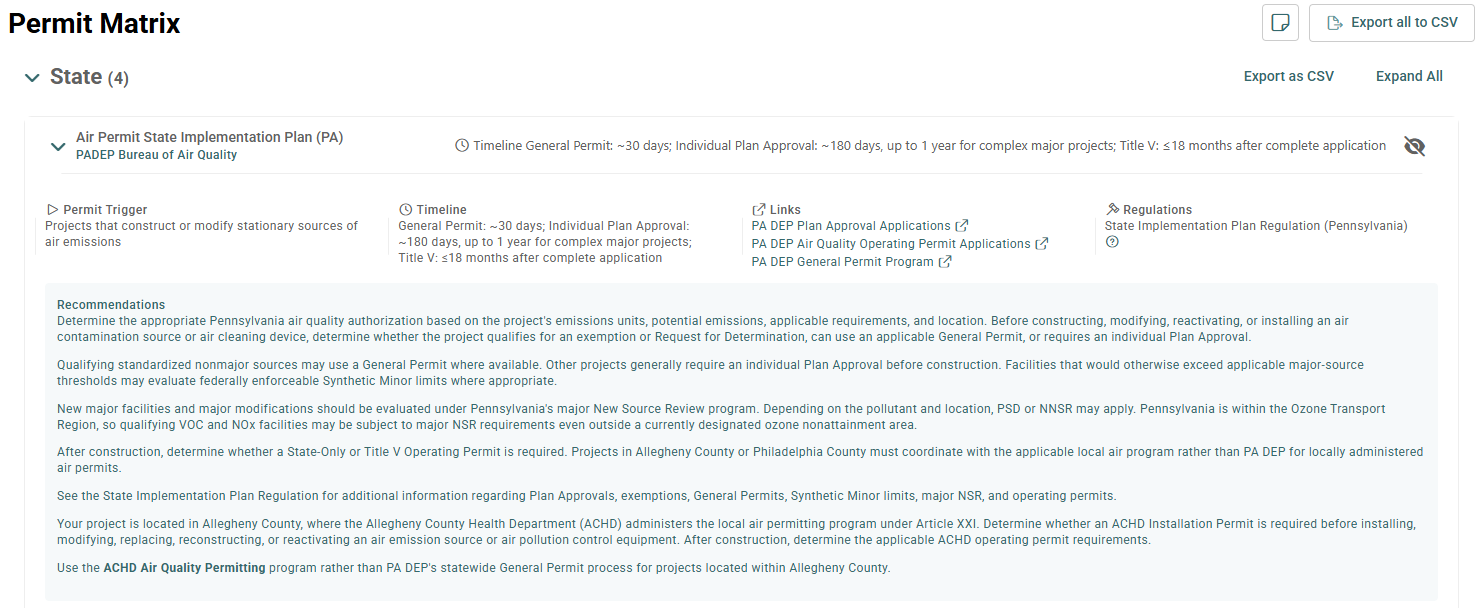
The State Implementation Plan (SIP) permit record identifies potential permitting pathways, recommended next steps, timing considerations, and agency and application links. Where a county or local air agency administers permitting, the record provides location-specific recommendations and links to the appropriate authority.
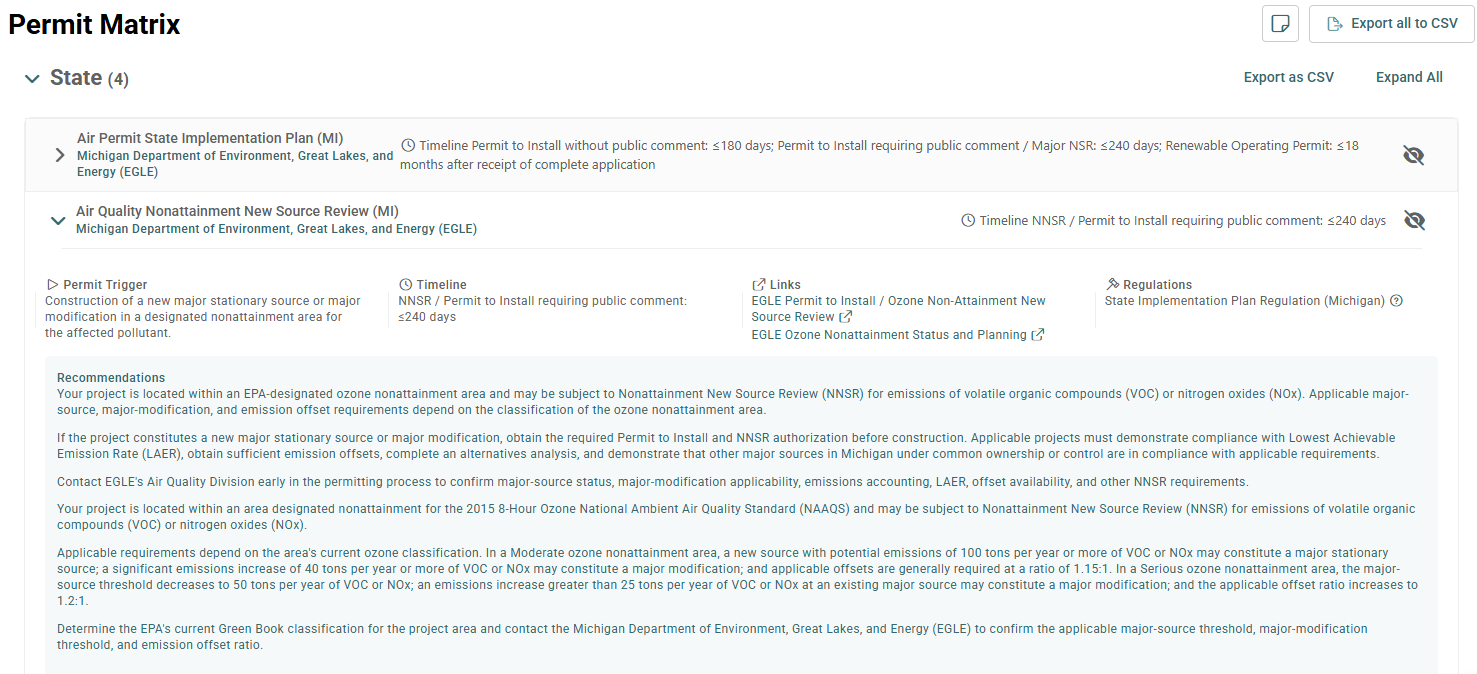
Transect also screens your project boundary against current EPA-designated nonattainment areas. When an overlap is identified, the Air Quality Nonattainment New Source Review (NNSR) permit record identifies the relevant area and pollutants and explains applicable emissions thresholds, controls, and offset requirements. The record appears only when an overlap is identified, signaling the need for further evaluation rather than an automatic permit requirement. NNSR applicability depends on whether the pre-construction project qualifies as a new major source or major modification for the affected pollutant.
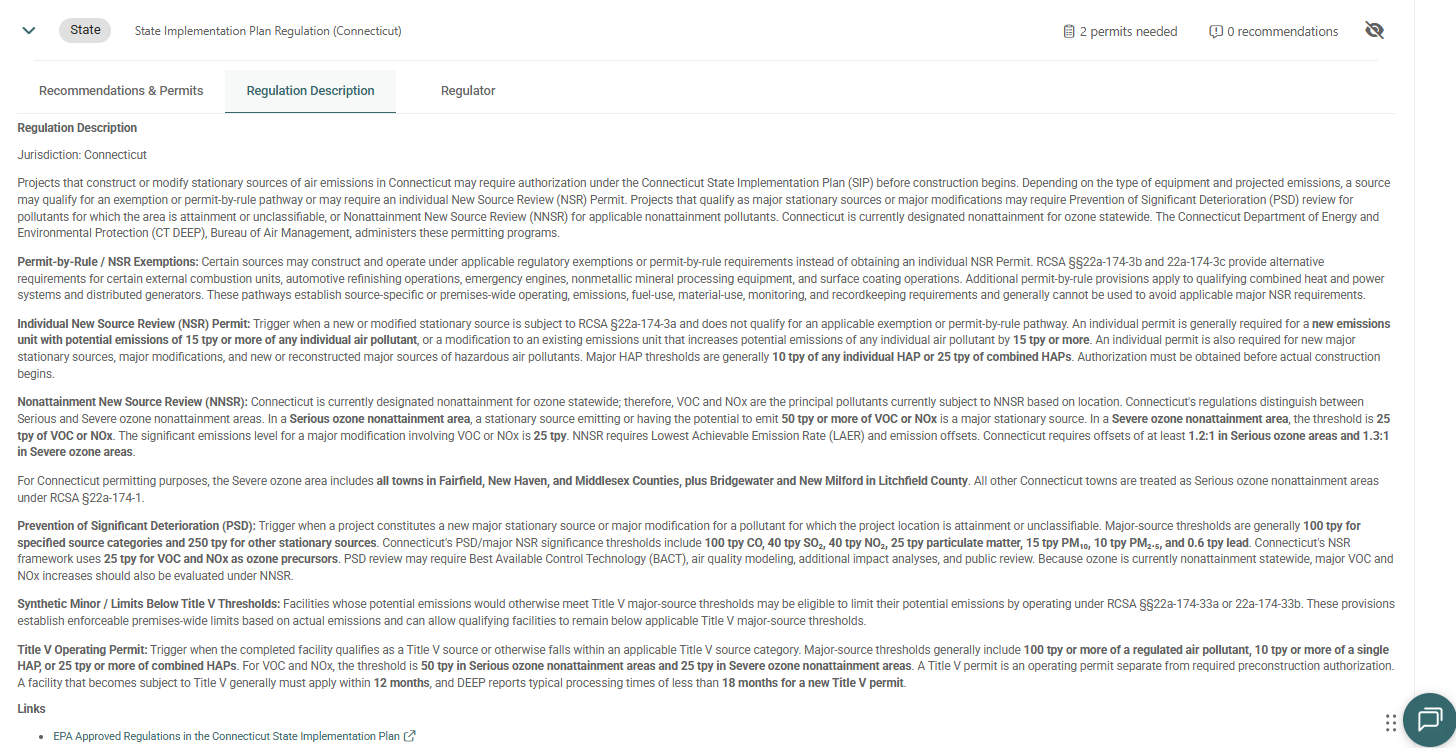
Transect provides additional detail under the associated State Implementation Plan regulation. It explains available permit types, exemptions, pollutant-specific thresholds, and construction and operating requirements that are applicable to that state.
Together, these records help you identify potential authorizations, recognize requirements that could increase review complexity or extend timelines, and begin agency coordination before permitting becomes a construction constraint.
Keeping Up With State Data Center Regulations
The regulatory landscape for data centers is changing quickly. Kentucky and Pennsylvania issued data center executive orders in August 2026, followed by Massachusetts, Virginia, and Maryland in September. Although their scope and implementation vary, these actions address energy demand, environmental protection, community engagement, and how state agencies evaluate proposed projects.
Transect now includes data center-specific regulatory guidance in the 15 states with identified data center regulations. We expect to see more states enact such guidance in the coming months. In states without a separate data center-specific requirement, projects remain subject to applicable federal, state, and local environmental permitting and development requirements.
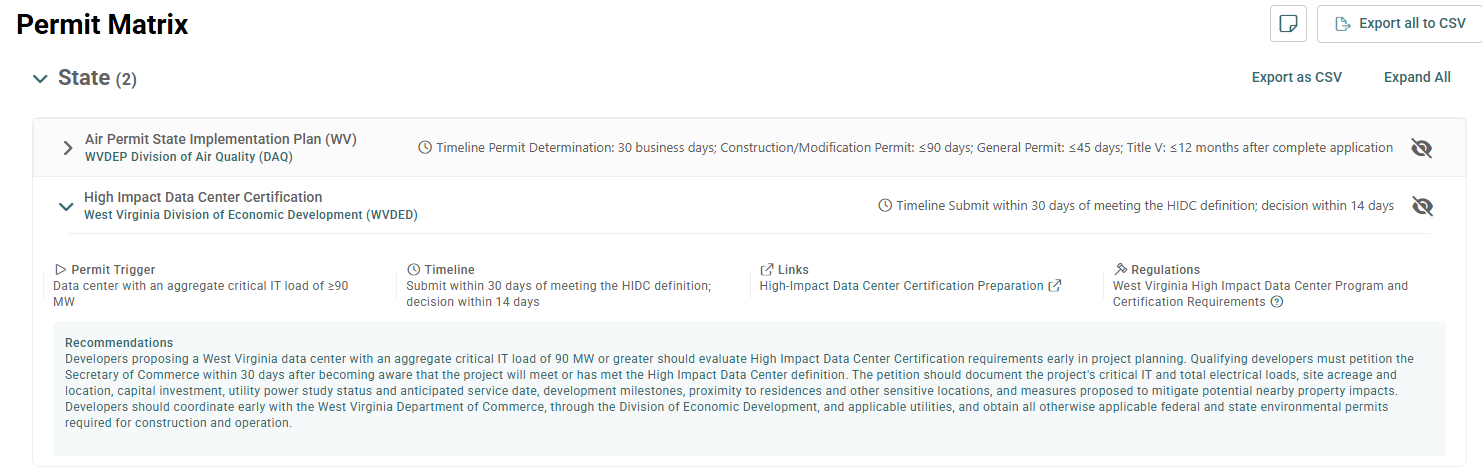
Where a permit or certification is required, you will find an associated permit record. For example, West Virginia requires High Impact Data Center Certification for qualifying facilities or groups of facilities placed into service on or after July 1, 2025, with an aggregate critical IT load of at least 90 megawatts. Developers must petition the Secretary of Commerce within 30 days of becoming aware that the project will meet, or has met, the applicable definition. Certification does not replace otherwise required federal or state environmental approvals.
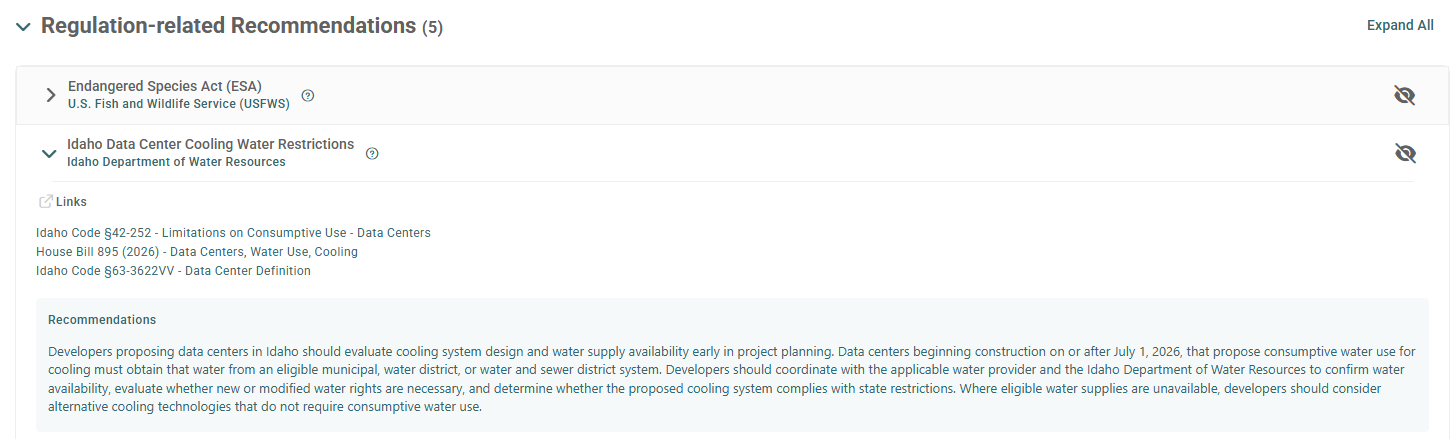
Requirements that do not involve a standalone permit appear under “Regulation-Related Recommendations” in the Permit Matrix. For example, qualifying Idaho data centers beginning construction on or after July 1, 2026, that propose consumptive water use for cooling must obtain that water from a municipal, water district, or water and sewer district system. Early identification helps developers evaluate water availability, coordinate with potential providers, and select an appropriate cooling system before finalizing project design.
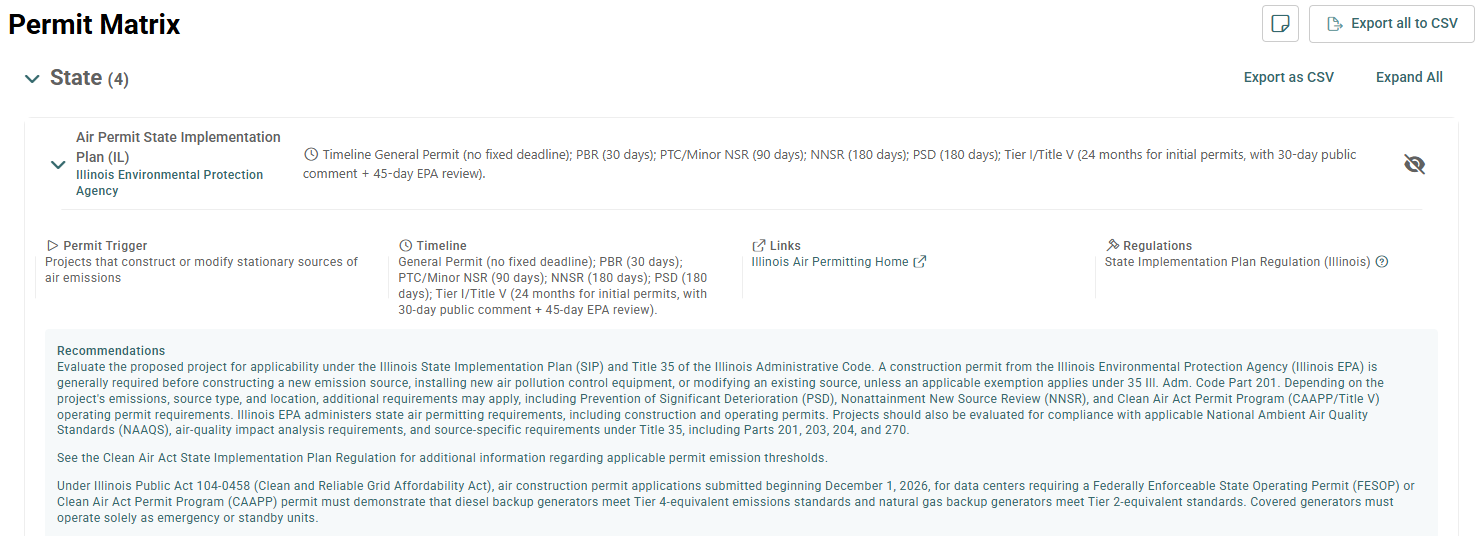
Some states have also adopted air-permitting requirements specifically for data centers. Illinois, for example, has established additional emissions and operating requirements for qualifying backup generators. We have incorporated these requirements into the Illinois SIP permit recommendation so developers can evaluate them alongside the broader air-permitting requirements for their projects.
Transect’s Environmental Team continues to track new legislation, executive orders, and agency guidance as requirements evolve. We are also preparing California’s new data center water-assessment and reporting requirements for release in Transect on January 1, 2027, when those laws take effect.
Identifying Moratoriums and Permitting Pauses With Pulse
Understanding the permitting pathway is only part of evaluating a site. Developers also need to know whether approvals can move forward.
Data Center Pulse captures statewide and local moratoriums and other development restrictions, including recent governor-issued executive orders and directives in New York, Texas, and Oregon. These actions differ in scope: New York paused certain environmental permits for new hyperscale data centers, while Oregon paused certain requests involving state-owned property rather than imposing a blanket statewide development ban.
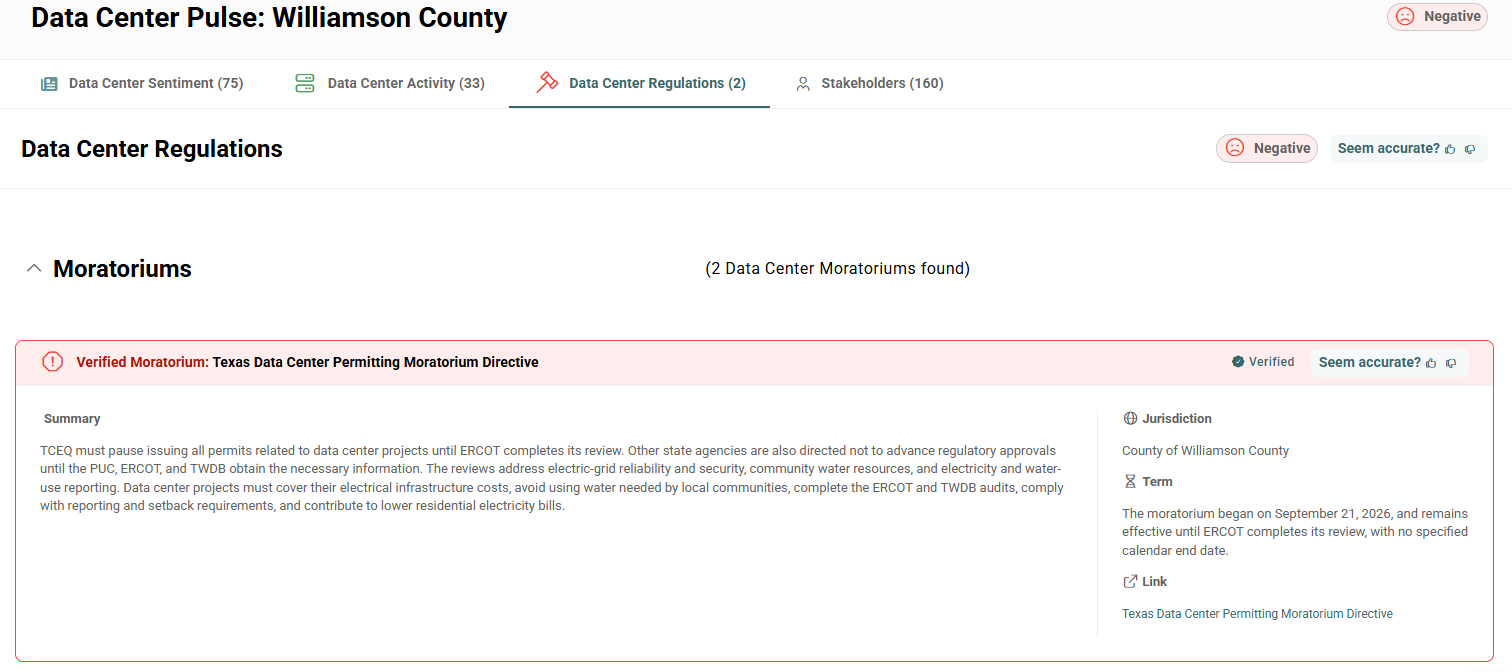
In Texas, Governor Greg Abbott’s August 2026 directive restricted data center advancement through the ERCOT interconnection process pending a state audit. His September directive also instructed the Texas Commission on Environmental Quality (TCEQ) to halt environmental permit issuance for data center projects pending grid and water-use audits. Developers should account for both restrictions when evaluating project feasibility and schedules.
Staying Informed After Your Initial Report with Risk Monitor
Requirements can change between initial site screening and construction, particularly in the rapidly evolving regulatory environment surrounding data center development.
With Risk Monitor enabled, existing Transect reports can receive email and in-app notifications when relevant permit and regulation changes are incorporated into the platform. Monitoring also includes Pulse updates, such as new articles that may identify moratoriums or other restrictions, changes in nearby project status, and shifts in community sentiment. These notifications help you determine when to revisit earlier assessments.
Identifying requirements early and tracking changes throughout development helps teams build better-informed schedules, address permitting questions sooner, and reduce preventable delays. Transect's Environmental Team will continue translating evolving requirements into practical guidance, helping developers plan ahead and reduce preventable delays.